Typical parts
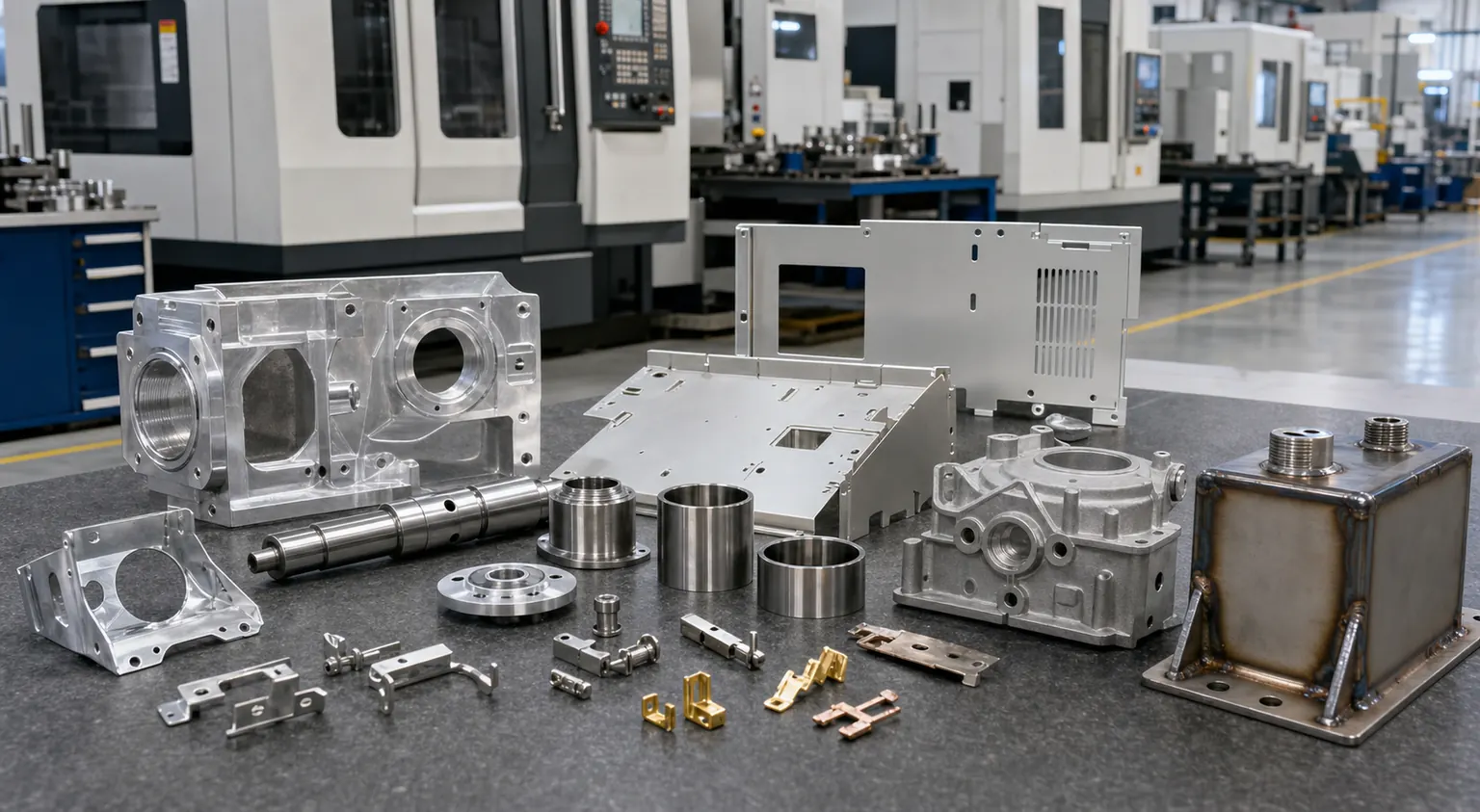
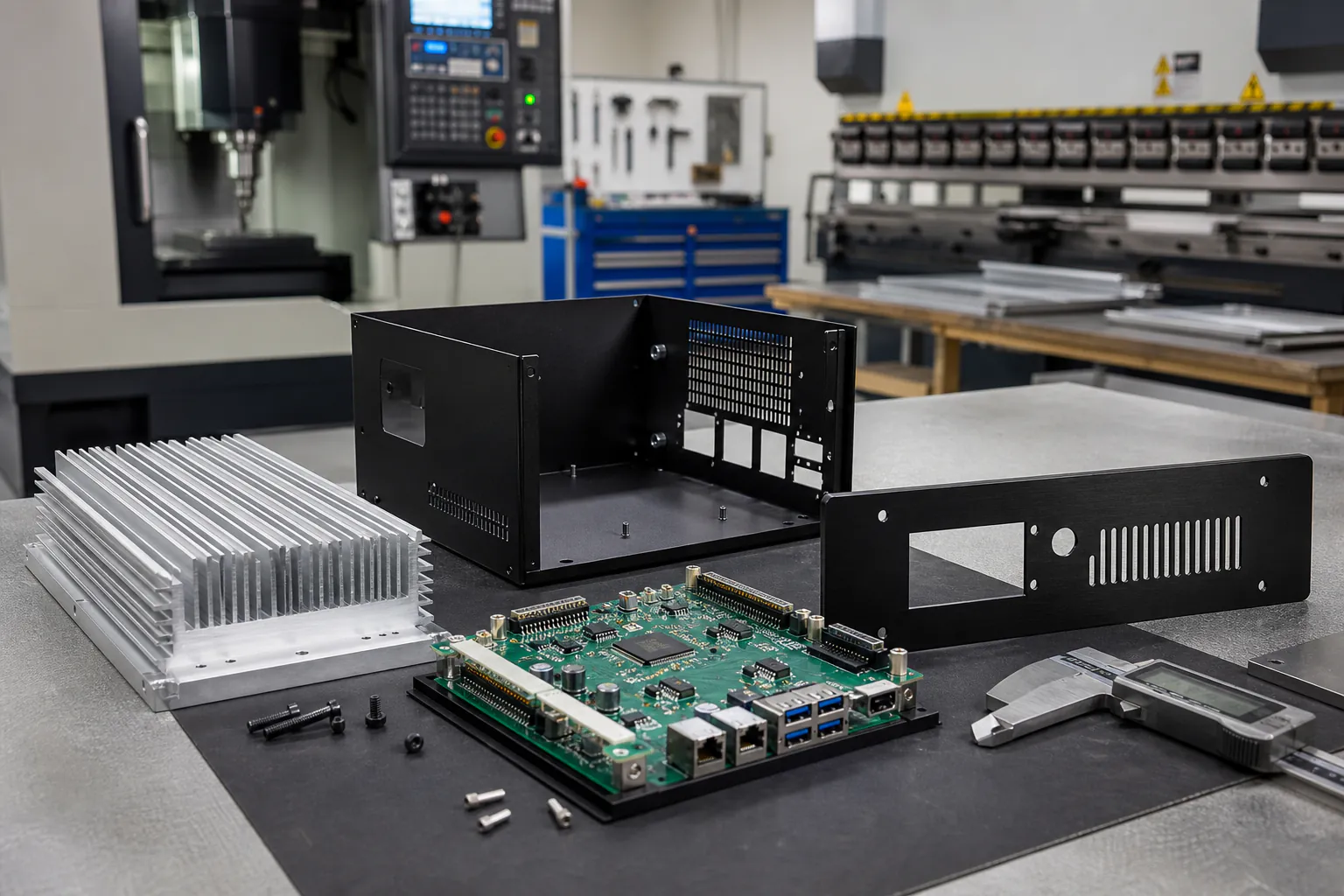
CNC-machined aluminum or stainless housings, manifolds, heat sinks, brackets, plates, shafts, bushings, spacers, adapters, fixtures, and precision machine components; Laser-cut and bent enclosures, panels, covers, chassis, guards, cabinets, trays, mounting plates, formed brackets, and sheet-metal subassemblies; Stamped clips, terminals, contacts, shields, washers, springs, retainers, deep-drawn shells, and high-volume formed parts supported by dedicated dies; Die-cast housings, covers, motor or gearbox bodies, structural brackets, welded frames, tanks, bases, and mixed-process assemblies with inserts, hardware, finishes, labels, and purchased items
Material guidance
Use aluminum 6061 or 7075 when machining strength, weight, thermal behavior, and anodizing matter; use aluminum 5052 for formed sheet work; review die-casting alloys separately because castability, porosity, machining, and finishing differ from wrought stock.; Select stainless 303, 304, or 316 by machining, corrosion, welding, forming, passivation, contact environment, and documentation needs rather than treating all stainless grades as interchangeable.; SPCC, low-carbon steel, galvanized steel, and structural grades can support economical fabricated, stamped, or welded parts, but grade, temper, coating, weldability, corrosion protection, and flatness requirements must be explicit.; Brass and copper parts require the exact alloy, temper, conductivity or thermal function, plating, burr control, forming direction, joining method, and oxidation protection to be defined.; Lock the material standard, grade, condition, source restrictions, mill or material certificate, approved substitutions, traceability, recycled-content rule, and buyer-owned compliance verification wherever those items affect function or approval.
Process review
Choose the route from geometry, material form, tolerance, surface, part size, quantity, annual demand, tooling budget, change risk, and assembly context rather than defaulting every metal part to CNC machining.; Use CNC machining for complex solid geometry and close feature relationships; use laser cutting and bending for formed sheet parts; consider stamping, deep drawing, or die casting when stable demand can justify tooling and cycle-time savings.; Compare a hybrid route when a casting, extrusion, forging, stamped blank, or welded fabrication still needs machined datums, holes, threads, sealing faces, bearing fits, or cosmetic finishing.; Define the manufacturing sequence so welding, heat treatment, forming, machining, grinding, deburring, coating, plating, marking, and assembly do not distort or cover the features used for final inspection.; Map common datums and interfaces across every component in the BOM, including purchased hardware, inserts, hinges, seals, fasteners, bearings, connectors, and mating customer parts.; Approve process-specific DFM, tooling or fixture design, pilot samples, first articles, secondary operations, assembly fit, packaging, and buyer-owned functional tests before repeat production.; Control in-house and partner operations with one revision, approved source route, inspection plan, nonconformance process, change notification, packaging specification, and shipment release record.
Quality definition
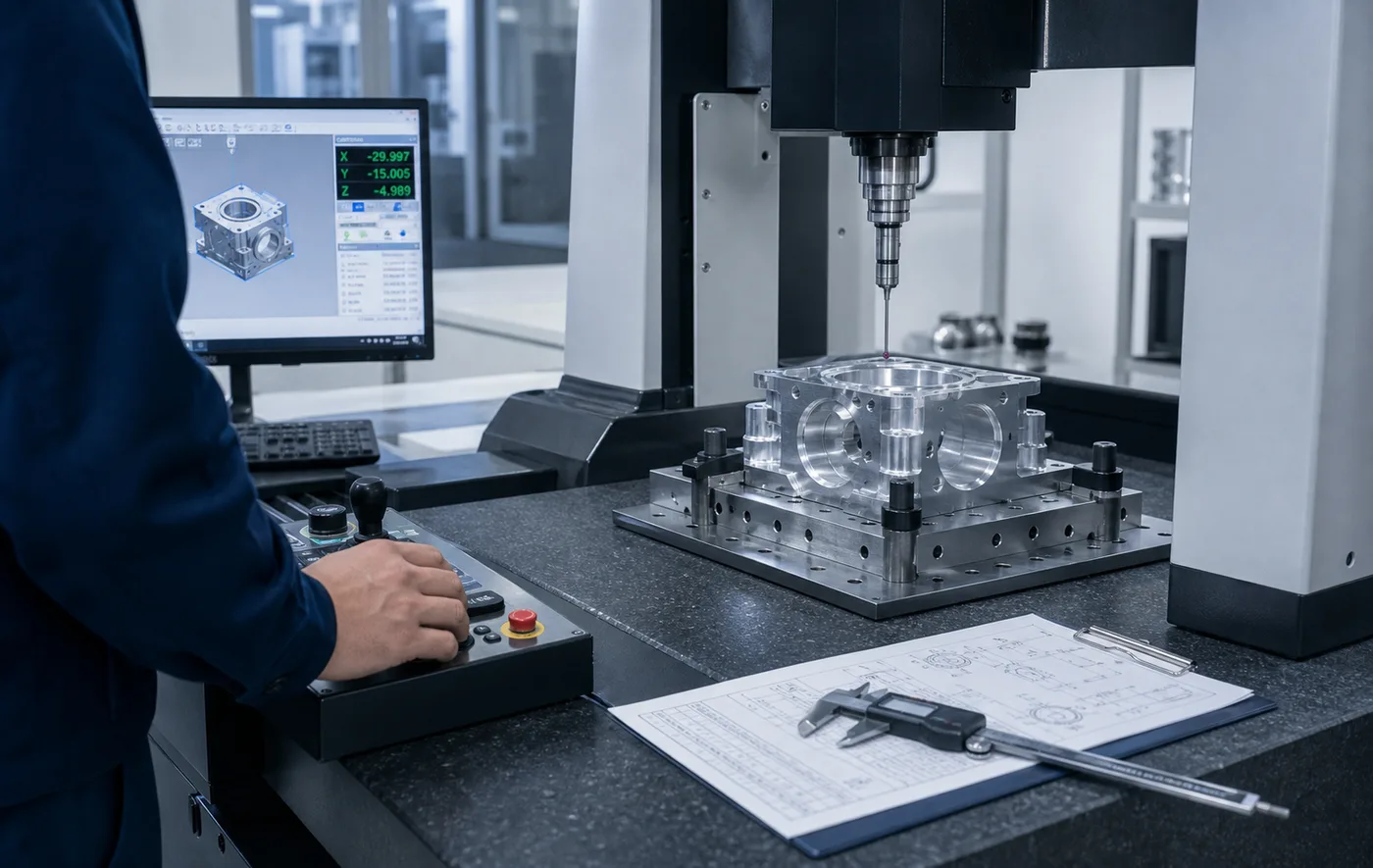
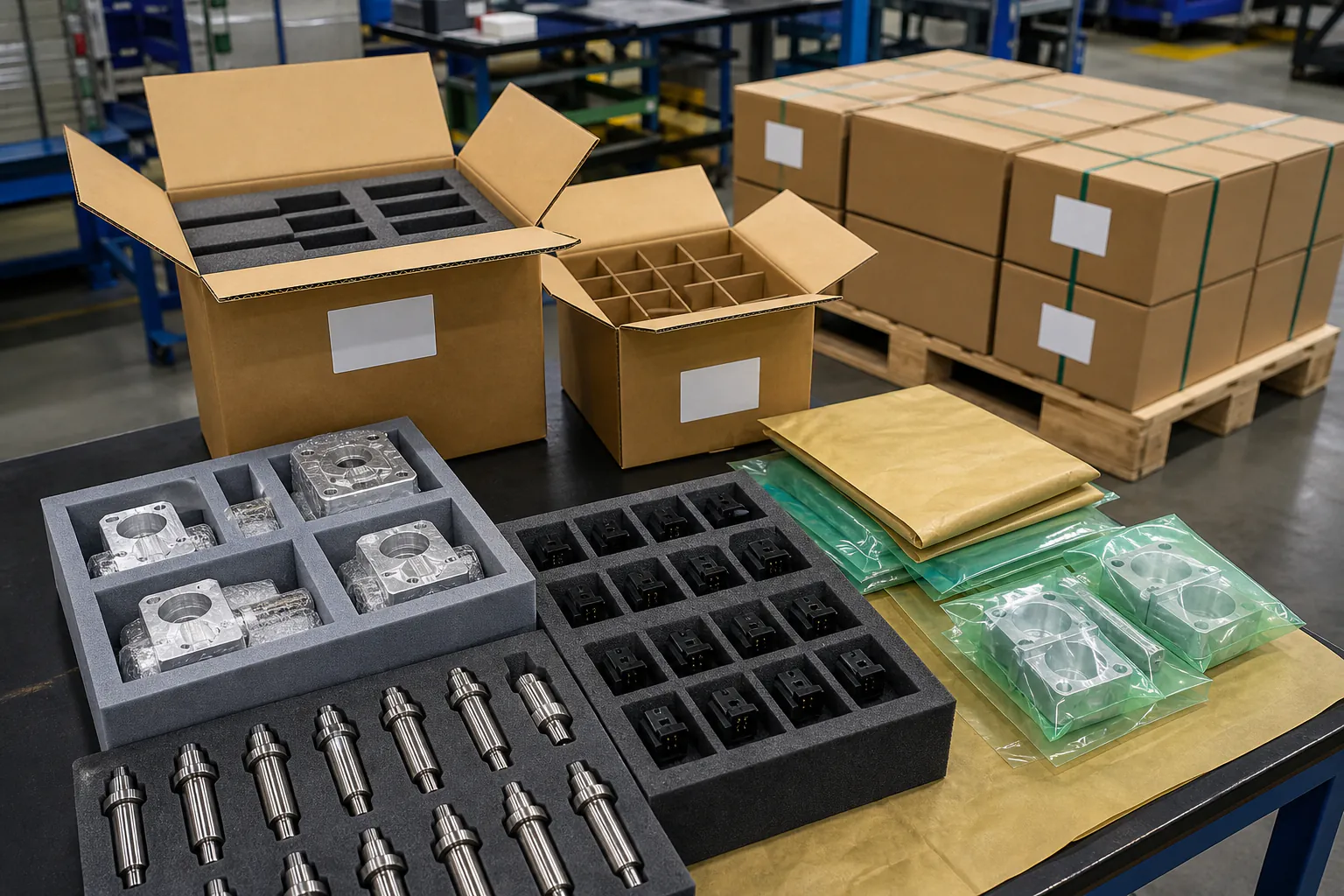
Identify critical-to-quality dimensions, datums, fits, threads, sealing faces, bearing seats, flatness, concentricity, bend relationships, weld locations, cosmetic zones, and assembly interfaces on controlled drawings.; Match evidence to the process: dimensional reports and CMM data for machined features, flat-pattern and bend checks for sheet parts, cavity or die traceability for tooled parts, weld inspection for assemblies, and coating or plating checks after finishing.; Approve production-intent first articles after heat treatment, machining, welding, grinding, coating, plating, marking, assembly, and other operations that can change dimensions or appearance.; Define material certificates, finish certificates, first-article records, inspection sampling, gauges, functional tests, traceability, retained samples, and deviation approval according to project risk rather than requesting every document by default.; Set measurable edge, burr, weld, spatter, distortion, color, gloss, texture, grain, tool mark, scratch, masking, corrosion, cleanliness, and cosmetic acceptance criteria before shipment.; Inspect the assembled product where component tolerances interact, and validate load, fit, motion, leak, grounding, thermal, electrical, vibration, or environmental performance under buyer-owned requirements when applicable.; Protect finished parts with separators, caps, plugs, film, desiccant, rust prevention, custom trays, labels, carton limits, crate design, and handling instructions appropriate to the surface and export route.
Cost and lead time
Primary route and material utilization: stock size, nesting, machining removal, casting yield, strip layout, blanking scrap, weld preparation, purchased minimums, and alloy availability; Non-recurring cost: programming, fixtures, welding jigs, stamping dies, casting tools, trim tools, gauges, inspection fixtures, samples, validation, and future tool maintenance; Part difficulty: setups, workholding, deep features, thin walls, small radii, tight bend or formed features, undercuts, weld access, distortion, difficult ejection, and cosmetic protection; Quality scope: close tolerances, datum relationships, surface roughness, CMM programming, gauges, material or finish records, testing, traceability, and first-article approval; Secondary scope: heat treatment, grinding, deburring, tapping, inserts, anodizing, plating, passivation, powder coating, painting, marking, welding, assembly, cleaning, and functional testing; Commercial plan: prototype and batch quantities, annual demand, forecast stability, MOQ, tooling amortization, inventory, consignment, packaging, Incoterm, freight method, delivery country, and requested schedule
RFQ package
STEP or STP models, controlled PDF drawings, DXF flat data, BOM, and assembly files; Metal grade, stock form or thickness, heat treatment, finish, restricted-substance, and substitution rules; Critical dimensions, datums, weld or joining notes, inspection evidence, functional tests, and cosmetic criteria; Prototype quantity, batch quantity, annual demand, target price, packaging, delivery schedule, country, and Incoterm